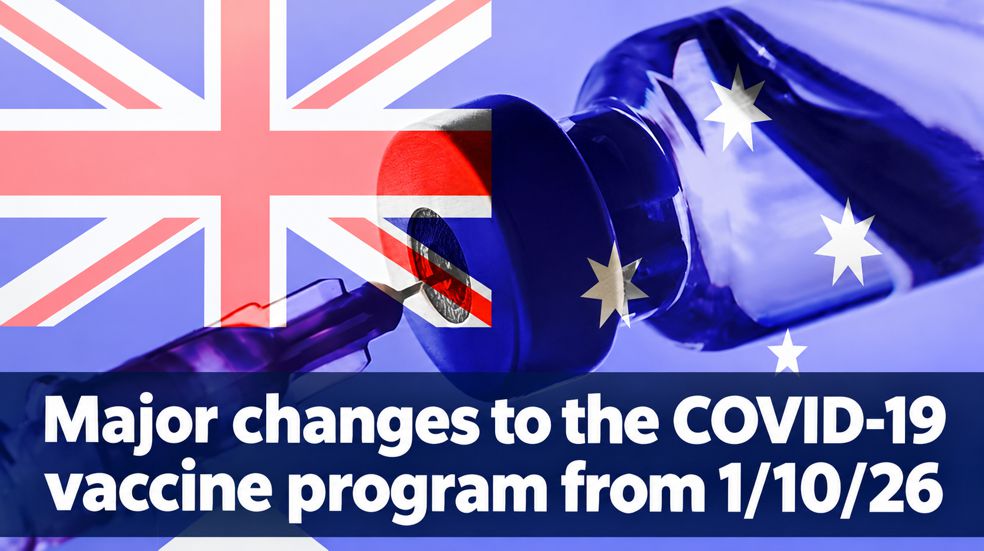
Free COVID-19 vaccines restricted to higher-risk Australians from 1 October
Australia’s universal free COVID-19 vaccination program has ended —with government-funded vaccines now targeted at people most vulnerable to severe illness.
From 1 October 2026, COVID-19 vaccines move from the standalone National COVID-19 Vaccine Program into the National Immunisation Program (NIP). People outside the funded groups may choose to purchase a vaccine privately after discussing the benefits and risks with their healthcare provider.
Free vaccination remains available to:
• Adults aged 75 and over: one dose every six months.
• Adults aged 65–74: one dose every 12 months.
• Aboriginal and Torres Strait Islander people aged 50–74: one dose every 12 months.
• Adults aged 18 and over with severe immunocompromise: one dose every 12 months.
The federal Department of Health, Disability and Ageing says the change reflects Australia’s transition from an emergency pandemic response to routine vaccination focused on preventing severe disease. COVID-19 is now endemic, but its effects remain disproportionately serious for certain groups.
For people losing access to funded vaccination, cost could become a barrier. In its 17 September report, the ABC News said private prices had not yet been confirmed while discussions with manufacturers continued.
Pharmaceutical Society of Australia vaccination ambassador Julianna Neill anticipated that COVID-19 vaccines would cost substantially more than the usual $25–$35 private flu vaccination. 9News coverage also states that privately purchased vaccine costs cannot be reimbursed through the NIP or Medicare.
Health experts have warned that the funding change should not be interpreted as evidence that COVID-19 is no longer a concern.
Speaking to RACGP’s newsGP, infectious diseases specialist Professor Paul Griffin said the virus continued to cause hospitalisations and deaths. He called for clear public communication and reliable vaccine access, warning that logistical difficulties could discourage people from receiving protection.
Under the new arrangements, state and territory health departments manage vaccine ordering and distribution. Immunisation Coalition chair Dr Rodney Pearce raised concerns that differences between jurisdictions could add complexity for providers and patients. Professor Griffin also highlighted the need to maintain access for healthcare and residential aged-care workers who may fall outside the funded categories.
The change comes amid declining vaccination uptake. The ABC News reported in September that approximately 1.7 million Australians had received a COVID-19 vaccine during 2026, compared with 8.9 million who had received a flu vaccination.
Doherty Institute epidemiologist Professor Jodie McVernon said incorporating COVID-19 vaccination into routine immunisation could improve awareness among vulnerable people. Australians unsure about eligibility, vaccination timing or private costs should contact their GP or pharmacist. (NQ)