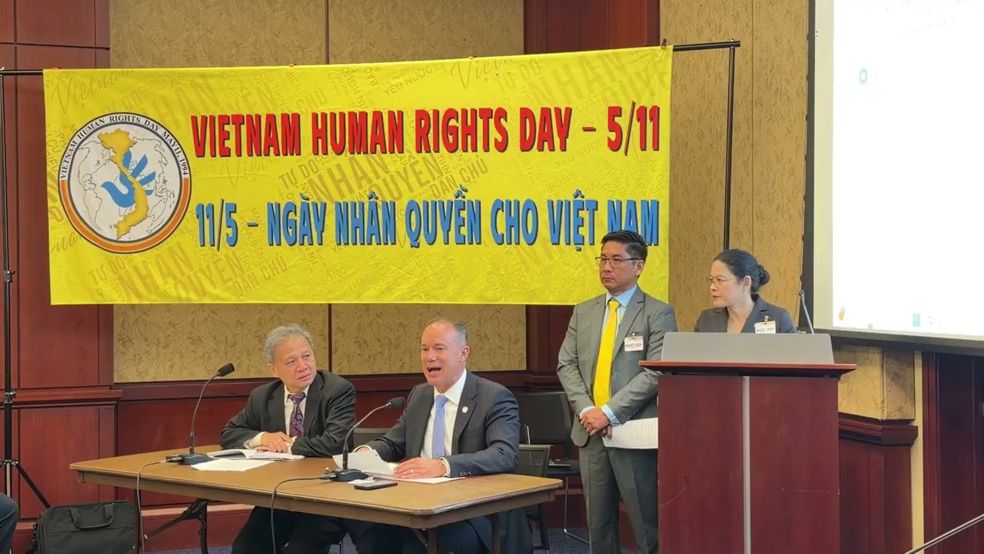
VIDEO: Dr. Eric Patterson’s Speech on Vietnam Human Rights Day 2026
Remarks on Vietnam Human Rights Day
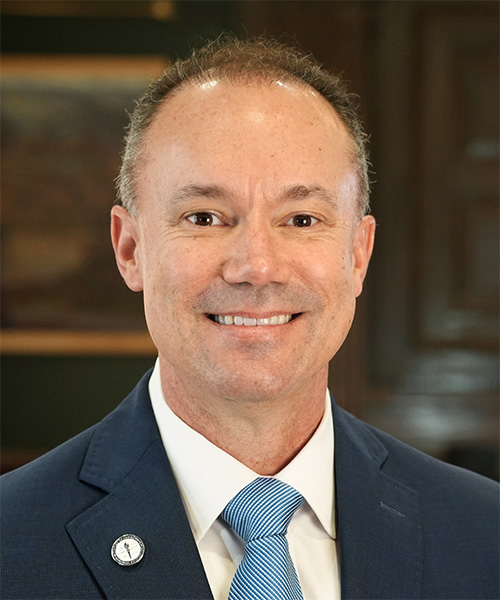
Speaker: Dr. Eric Patterson
Chair of Victims of Communism Memorial Foundation
Thank you. Thank you.
And it’s an honor to be here with you to commemorate this 32nd Vietnam Human Rights Day. At the Victims of Communism Foundation, our mission is to educate all generations about the terrible ideology, history, and legacy of communism. Interestingly, just as this day was codified in law in 1994, our nonprofit foundation was created in the spring of 1994 as well—we share that birthday.
I was asked to answer the question, how does the lack of free elections at home drive the regime’s need to silence political opposition abroad? And let’s be clear about three things:
- First, despite its name of being a republic, Vietnam is not a democratic republic.
- Second, it is not a free-market capitalist economy. And when we get to perhaps the Q&A and discussion, I think that economic leverage is actually a huge tool that the US has and is not using effectively.
- And third, communist Vietnam is not benign. It is a violent and belligerent state at home and abroad.
So, let me specifically talk about the relationship between transnational repression and elections. Elections provide a rare, significant moment to publicly test the claim that a country is taking care of its people, that it’s a democracy. Most people in America would be surprised to know that there was an election in Vietnam just last week. It wasn’t reported in almost any of the American press. If you do a search online for it, it’s actually quite hard to find except for from official government sources. So let’s just briefly look at process, context, and legitimacy.
What do elections do? Well, first, elections by their very process raise questions about participation, citizenship, competition, elite circulation, the transition of power, and minority rights. And the government of Vietnam fails, and the election last week fails on all those counts. Second, elections are important in terms of context. Elections raise issues not only of process but about transparency, about freedom of the press, the right to assemble, about competition, about debate among different voices, about competing visions for the country. All of these are throttled in Vietnam today. The election last week fails on context. And then third, elections are about legitimacy and not the phony legitimacy of essentially forcing the entire public to vote towards a predetermined outcome, but rather the legitimacy of a government and its policies in a test—elections as a test of the legitimacy of the country’s direction. So of course, last week’s election fails on all those counts.
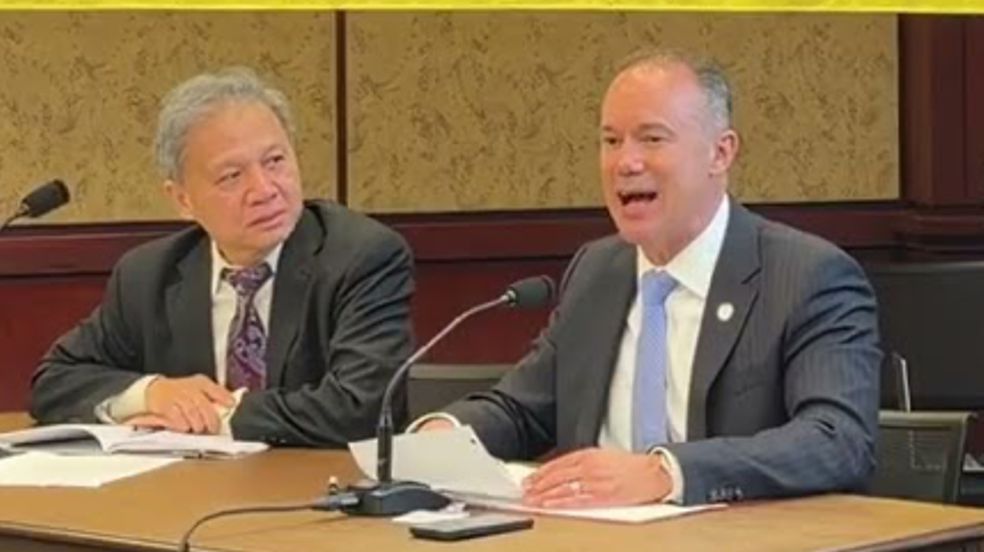
So when a political system is repressive and corrupt at home, that pressure has to be released elsewhere. There have to be witnesses elsewhere. And that’s why the government in Vietnam practices transnational repression abroad.
How does it do it? We’ve talked a little bit about it: through coercion, through intimidation, through abductions, through threats and harassment, through bullying, through the attempts to repatriate dissidents and asylum seekers back to the country. The reason that they practice transnational repression, the reason that there’s been an increase in it in the past four years is precisely because the voices outside of Vietnam—voices that we see in this audience and on this panel today—because outside of the country, that’s the only possible witness to tell the truth about the regime today.
Well, I hope that we get a chance to talk more about what can be done. But let me just remind us of three economic facts.
- The first is that six of the top 10 countries involved in Vietnam’s economy are among our closest allies. And America itself has double the purchasing power of China when it comes to Vietnam. Double. But also close friends Japan, South Korea, the United Kingdom, the Netherlands are all in the top 10. We have a lot of leverage economically that we’re not using.
- Second, up to 5% every year, and it used to be up to 15% of Vietnam’s economy, comes from remittances. We’ve been propping their economy with remittances from abroad. We should have thought a long time ago about stopping or changing that practice.
- And then of course this is not a free-market country because it’s faced so much of its economic growth through online piracy, through surveillance, through counterfeiting, through the theft of intellectual property. And instead of rewarding that behavior, we should be much more aggressive in prosecuting those behaviors and not giving kind of favored status to that government.
Well, in honor of this important day, thank you for allowing us at Victims of Communism Foundation to be here today. And let me simply invite all of you, since many of you are in from out of town: The museum will be open all afternoon today. After this event, come and see us at McPherson Square at the Victims of Communism Museum. Thank you very much.
Q&A Session
Moderator: How can democratic nations better coordinate to hold the Vietnamese authorities accountable for their failures to hold free and fair elections? Well, I know this is a long one, but you have only three minutes.
Dr. Patterson: So, I’d say two things. I mean, one area where we’ve had actually very good cooperation over the past decade, led by Sam Brownback more than anyone else, has been on the international religious freedom front, and that is to set up institutions that are longer than any one administration, such as the Ministerial to Advance Religious Freedom that brings government heads together; the separate International Religious Freedom Summit. Thang’s been very involved with the education side of that and then some other initiatives as well. And so, religious freedom has often been kind of the forgotten of the human rights for a variety of reasons. The past decade we’ve seen actually far more reporting, a very vigorous USCIRF, very vigorous international religious freedom office in the State Department. And so one of those things is we didn’t have a mechanism before about eight years ago that was actually cooperation internationally around that specific issue.
As I said earlier, the biggest point of leverage is on the economic front, and our close friends like the Netherlands, the UK, South Korea, Japan alongside the US, we are the six biggest trade partners for South Korea [sic]. And so bringing together the economic types of arguments that you said, I mean, it hurts our economic interests when slave labor drives prices down and it’s morally wrong. And so the things that Dr. Thang said and others said, but we actually have a tremendous amount of economic leverage if Western governments would cooperate to use it. That’s our best approach. I think in the case of Vietnam, it’d be pushing them, pushing them, pushing them towards democratic transition.
Moderator: The last question straight to the heart of this event. Somebody would like to know, when do we have human rights in Vietnam? Please, any of the four panelists would answer this.
Dr. Patterson: I would just say, first, amen. Second, I’m quite hopeful that by the time we get to the 40th anniversary of this, and maybe the 37th, that Cuba will have fallen, Venezuela will have changed, and that Vietnam will have changed. I do have one challenge specifically for this audience, and that is that I’m not convinced that your children and that your grandchildren have bought into the things that we’re talking about here. And so I think a huge challenge for the diaspora community is, why don’t we see the Vietnamese American youth and young adults at the front of this movement instead of not participating whatsoever? And so I would just urge us all, myself, all of us, that there’s a missing group on the front lines of the advocacy in my opinion. I would love to be wrong on this. There’s a missing group and somehow we have to be doing a better job of engaging the younger Vietnamese American, the Vietnamese friends, the Vietnamese wherever they are, to be on the front lines of this fight to save their country.
Closing Remarks
Moderator: Next, I would like to invite Dr. Patterson to give his one-minute remark.
Dr. Patterson: I would simply mention that last year I was in Houston. I’m so proud that the people of Houston, the Vietnamese community in Houston, stopped the charm offensive by the government of Vietnam that was going to hold a major expo to tell the world about how great the communist system was. And I would simply say that in addition to transnational repression, there’s also the charm offensive that’s constantly going on. And I think that Vietnam learned it from Beijing. And so, not only the bad stuff, but the false promises of economic development and social unity and blah blah blah blah blah, which often is actually just really, really about profits and low-cost labor and things like that. We have to fight against the charm offensives in addition to the transnational oppression. And I honor those of you who call out the lies of the charm offensives as well.
Dr. Eric Patterson
(Vietnam Human Rights Day, May 11, 2026)