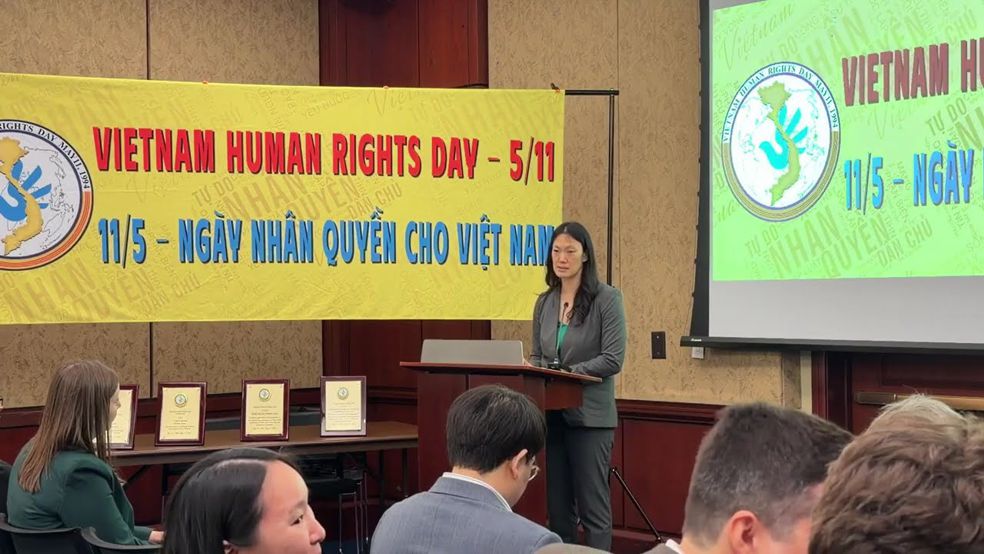
VIDEO: Ambassador Julie Turner’s Speech on Vietnam Human Rights Day 2026
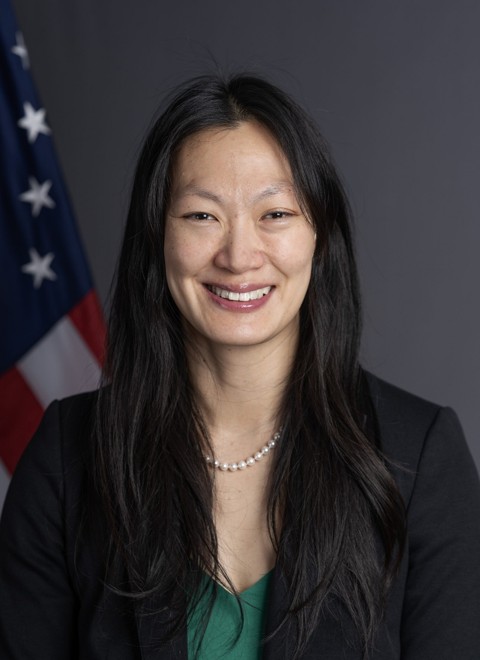
Ambassador Julie Turner
Acting Deputy Assistant Secretary of State in the Bureau of Democracy, Human Rights, and Labor (DRL) at the U.S. Department of State.
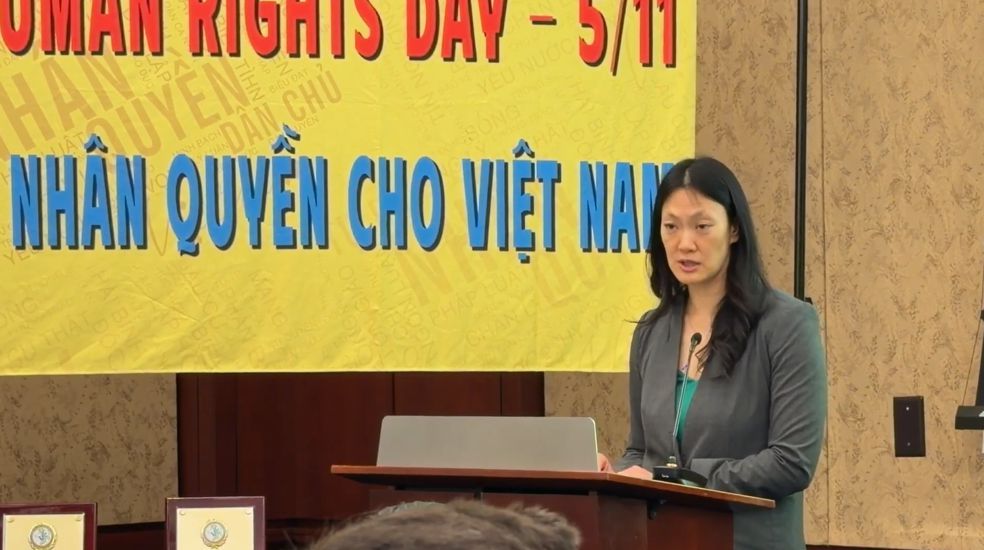
Good morning everyone. Thank you for the opportunity to speak with you today at the 32nd commemoration of Vietnam Human Rights Day. I would like to take a moment to thank the committee for gathering us here for the past three decades. I would also like to acknowledge our distinguished moderator and speakers for sharing their powerful testimony with us today and Congressman Brian Fitzpatrick and Derek Tran for co-sponsoring this year’s commemoration.
Thanks to all of you.
Friends, colleagues, and members of the Vietnamese American Diaspora,
It’s an honor to stand before you today. You have shown extraordinary courage in your journey to freedom and you continue to be powerful voices for human rights and fundamental freedoms. Many in this room do so in the face of personal risk for their work. This includes our longtime friend, Dr. Nguyen Dinh Thang, a US citizen who was convicted in absentia by Vietnamese authorities on charges of terrorism. Your resilience and your commitment to freedom and human dignity are inspiring. You remind us why America must stand up for those who yearn to be free.
Vietnam has made significant strides in improving the lives of its citizens, including reducing poverty, expanding access to education, and improving healthcare. These achievements are all commendable.
Secretary Rubio has emphasized the importance of deepening cooperation with Vietnam in key areas such as critical minerals and energy security as well as expressing gratitude for Vietnam’s support as a founding member of the Board of Peace. The United States also values its comprehensive strategic partnership with Vietnam.
But a strong relationship must be built on honesty, and we must be honest about the serious human rights challenges that persist in Vietnam. True partnership requires candor, and the United States will always speak clearly about our concerns when fundamental freedoms are at stake. Under President Trump’s leadership and Secretary Rubio’s direction, the United States has reaffirmed its commitment to defending fundamental freedoms worldwide. As Secretary Rubio emphasized in his December 2025 remarks to the press, foreign policy needs to be rooted in the national interest of the United States, and protecting human rights is central to that mission.
Vietnam’s human rights record is deeply concerning and we would like to see the government make improvements in three critical areas: freedom of expression, freedom of religion or belief, and ceasing its transnational repression activities.
First, we’re deeply concerned that the Vietnamese government continues to severely restrict freedom of expression and the government is poised to make a restrictive environment even worse. The government maintains tight control over digital spaces, making it increasingly difficult for individuals and organizations to report about human rights conditions online.
The government has leveraged cybersecurity laws to expand government authority to censor online content and force internet service providers to monitor or remove content deemed threatening to national security. The government has also orchestrated attacks against websites perceived as critical to the government, conducted surveillance on dissident bloggers, and restricted access to social media platforms.
Journalists, religious actors, and even ordinary citizens who dare to report the truth face harassment, detention, and imprisonment under vague national security provisions. I’m particularly concerned about the health and welfare of independent journalist Lê Hữu Minh Tuấn, whose sister is a US citizen. We urge the government of Vietnam to grant him humanitarian relief so that he can seek the medical care that he needs.
Draft legislation is expected to encourage even greater self-censorship. Earlier this year, the Ministry of Public Security released draft legislation that would further tighten the government’s control of online speech, imposing fines up to 10 times higher than previous amounts and introducing criminal penalties for AI-generated content. We are also particularly concerned by the draft fake news law, which would require internet service and social media providers to proactively filter content and potentially share user data without due process.
These restrictive policies don’t just harm Vietnamese citizens, they also constrain American companies and American voices. Stringent cybersecurity laws and content regulations force US technology companies to comply with censorship demands or face being blocked from the Vietnamese market. These policies stifle innovation. They limit the free flow of information and undermine internet freedoms that are essential for success in the 21st century. The government has also announced plans to transfer key digital economy and cyberspace functions to the Ministry of Public Security, further consolidating control.
This administration believes deeply in the power of free speech. We have taken action to protect Americans’ freedom of expression both at home and abroad. And we will continue to advocate for this fundamental freedom for all persons everywhere, including in Vietnam. We urge the Vietnamese government to release all those who have been unjustly detained for exercising free speech to meet its international obligations, including to protect freedom of expression and to reduce undue restrictions on the press and online platforms.
Second, freedom of religion or belief is also a significant concern for the United States in Vietnam. Vietnam has been on the US Special Watch List for severe religious freedom violations since 2022.
The government of Vietnam maintains significant control over religious practices and Vietnam’s laws include vague provisions to restrict the exercise of religious freedom in the name of national security and social unity. The US Commission on International Religious Freedom’s 2026 annual report highlighted several instances of Vietnamese authorities threatening, harassing, and detaining religious freedom advocates.
Members of religious communities, including Christians, Buddhists, and others who practice their faith outside state-controlled institutions, face constant surveillance and harassment from local and state authorities. In some cases, houses of worship are shuttered. Religious leaders are imprisoned. Believers are often told to renounce their faith or face arrest, forcing them to choose between their faith or their freedom.
The United States reaffirms its commitment to religious freedom as an unalienable right. We believe that faith is vital to human flourishing and a free society, and we will continue to stand with those who face persecution for their beliefs. We call on Vietnam to take steps to address our human rights concerns and to ensure all individuals practice their religion or belief without fear or reprisal.
Third, and finally, the government’s willingness to reach out beyond its borders to silence critics and intimidate diaspora communities is particularly concerning. This use of repression beyond its own borders, often referred to as transnational repression or TNR, violates the sovereignty of other states and is unacceptable.
The Vietnamese authorities are escalating their use of TNR and are using quick trials in absentia and the issuance of Interpol Red Notices to key travel of US citizens and other human rights and religious freedom advocates abroad. Tactics include revoking passports, surveillance, intimidation, kidnapping, and threats to family members remaining in Vietnam. There are also reports about cases of activists being sent home or refouled from other countries at the behest of the Vietnamese authorities and subsequently imprisoned in Vietnam.
I know many of you here have shared harrowing experiences and have borne witness to the far-reaching negative consequences of TNR in your own lives and those of your colleagues and family members. Let me be clear: The United States will not tolerate efforts by foreign governments to intimidate, harass, or threaten people on American soil. We will protect the rights of US citizens and our residents to speak freely, to advocate for change, and to live without fear of retaliation from authoritarian regimes.
Finally, as we commemorate Vietnam Human Rights Day, we honor those who have suffered for their beliefs, those who remain in prison for speaking truth, and those who continue to work for freedom globally. We stand with you. Thank you for your courage, resilience, and your unwavering commitment to human rights.
Together, we will continue this vital work until every person in Vietnam can live in freedom and dignity.
Thank you very much.
Ambassador Julie Turner
(Vietnam Human Rights Day, May 11, 2026)