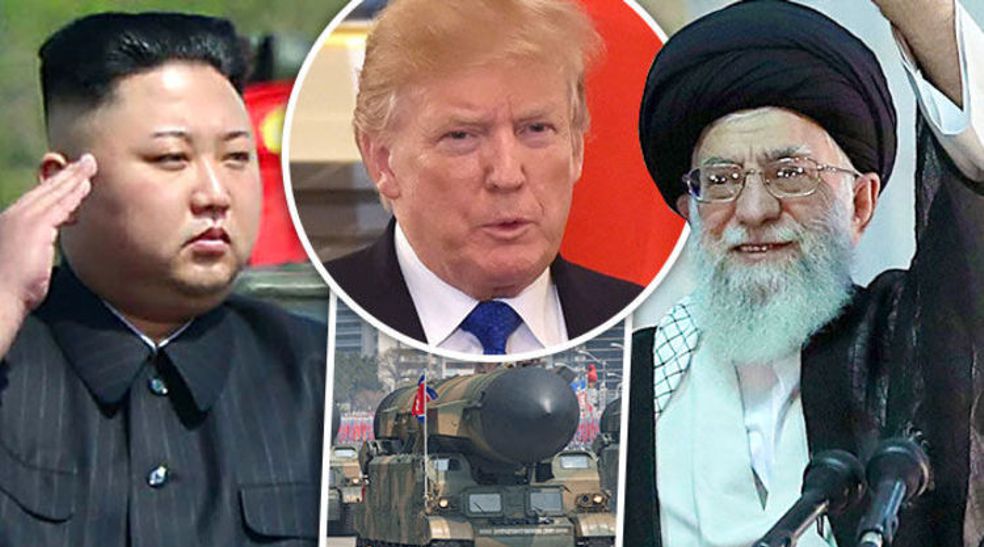
If Kim Jong Un can have nukes, why can’t Iran?
Dr. Harlan Ullman (The Hill)
The Trump administration, along with its Israeli ally, has been at war with Iran for 11 weeks. The ostensible reason was that Iran was so close to obtaining a nuclear weapon that only an operation as massive as Epic Fury could prevent that from occurring. Yet last June, Operation Midnight Hammer “obliterated” Iran’s nuclear capacity. Is there a small disconnect here?
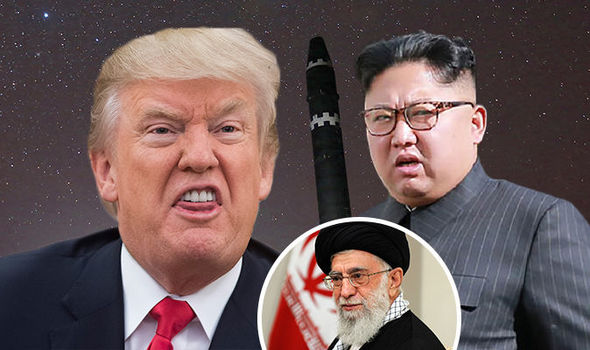
The other objectives were regime change, destroying Iran’s rather meager air force and navy, striking its missile infrastructure and removing Iran as a threat to the region. One can assess how many missions were accomplished, as the Strait of Hormuz remains blocked by both Iran and the U.S.
But why is it unacceptable for Iran to have nuclear weapons when, only a decade ago, North Korea and its unstable dictator Kim Jong Un were allowed to retain theirs and fit them to longer range missiles? Was Kim a lesser threat? Was he not seen as volatile and dangerous as the mullahs and Islamic Revolutionary Guard Corps who run Iran? Why this anomaly?
Set aside for a moment the rhetoric about Iran’s threat of “death to America” and its 47 years of war against the U.S., as the administration claims. The U.S. and United Nations did fight a war against North Korea from 1950 to 1953 that killed many more Americans than Iran has. That war has, technically, never ended, and is under a 70-plus year truce.
History underscores the paradox of allowing a nuclear North Korea and denying Iran similar weapons. The crisis began in July 2017 when North Korea conducted a series of missile and nuclear tests. By September, it tested a 250 kiloton weapon, demonstrating the ability to launch ballistic missiles well beyond its immediate region, reaching as far as Alaska. This suggested its nuclear weapons capability was developing far faster than U.S. intelligence had assessed.
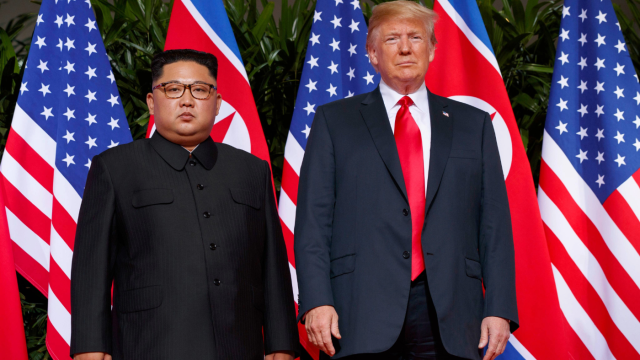
On Aug. 8, 2017, President Trump declared that this threat from the north would be “met with fire, fury and frankly power, the likes of which the world has never seen before.”
The rhetoric assumed nuclear proportions. North Korea’s United Nations ambassador countered that Trump was creating a “dangerous situation in which thermonuclear war may break out at any moment.” Trump retaliated at the U.N. General Assembly meeting, threatening “to totally destroy North Korea,” calling Kim “Rocket Man.”
Kim fired back calling Trump a “dotard,” warning he would “pay dearly.” The rift continued in early January 2018, when Trump posted that he too had a “Nuclear Button” that was “much bigger and more powerful,” and that his “Button works!” It was reported that Trump raised the idea of using a nuclear weapon against North Korea and blaming a third party.
Cooler heads prevailed. Trump’s chief of staff, former Marine Gen. John Kelly, convened senior leaders in the White House to brief the president on the huge consequences of another Korean War. But the possibility of a war loomed. Defense Secretary James Mattis reportedly slept in his clothes, ready to order the shooting down of any incoming North Korean missiles.
Experts took the possibility of war seriously. Republican Sen. Lindsey Graham (R-S.C.) put the odds of war at 30 percent. Retired NATO commander Adm. James Stavridis estimated a 10 percent chance of nuclear war and believed a conventional war would kill over a million. Former CIA Director John Brennan said that the chances were 20-25 percent and then president of the Council on Foreign Relations, Richard Haass was the most pessimistic, calling it 50-50.
As we know, Trump and Kim subsequently exchanged letters, and Trump “fell in love” with the Korean dictator. They met three times. While there was no agreement to officially end the Korean War, North Korea was no longer the serious threat it once was. Whether that will change with the new Axis of Evil consisting of China, Russia, Iran and North Korea remains to be seen.
If Trump could reverse course so quickly with Kim, why not with Iran? Iran has no bomb nor capability to attack the U.S. North Korea did and still does. The U.S. was obviously considering military action against North Korea and wisely declined that option. It is now at war with Iran.
While many will not agree with this question, it still needs a good answer: Why is Iran more dangerous than North Korea?
Harlan Ullman, Ph.D., is UPI’s Arnaud deBorchgrave Distinguished Columnist, a senior adviser at the Atlantic Council, the chairman of two private companies and the principal author of the doctrine of shock and awe. He and former United Kingdom Defense Chief David Richards are the authors of a forthcoming book on preventing strategic catastrophe.
https://thehill.com/opinion/national-security/5860146-trump-kim-iran-nuclear